How to Organize Your Wedding Timeline Written
A Stress-Free Guide for Your Big Day
Planning a wedding is a beautiful blend of excitement and logistics. While choosing flowers, colours, and dresses can be fun, building a wedding day timeline is just as important—it’s the glue that holds the whole day together. A well-structured timeline ensures that everything runs smoothly, from hair and makeup to group photos and heartfelt conversations with your guests.
Here’s a comprehensive guide to organizing your wedding timeline and the key factors you’ll want to consider to make your day feel effortless, intentional, and enjoyable.

Bridal Party just after a first look
1. Start With Your Ceremony Time
The best place to begin building your timeline is with your ceremony time—it’s the fixed point everything else will revolve around. Once this is locked in, you can work both backward (for the morning preparations) and forward (toward the reception).
Ask yourself:
Is your ceremony earlier or later in the day?
Will it be in a different location than your reception?
Will there be any cultural or religious elements that affect the timing?
Most wedding ceremonies typically take 30 to 45 minutes, depending on the style and whether you’re including elements like readings, rituals, or musical performances. Be sure to confirm with your celebrant or officiant how long your particular ceremony will run, as this affects how much time to allow before and after.
For example, if your ceremony is at 3:00 PM and expected to run for 40 minutes, you’ll want everyone ready by at least 2:15 PM, allowing time for transportation, pre-ceremony photos, and a short buffer to relax before walking down the aisle.
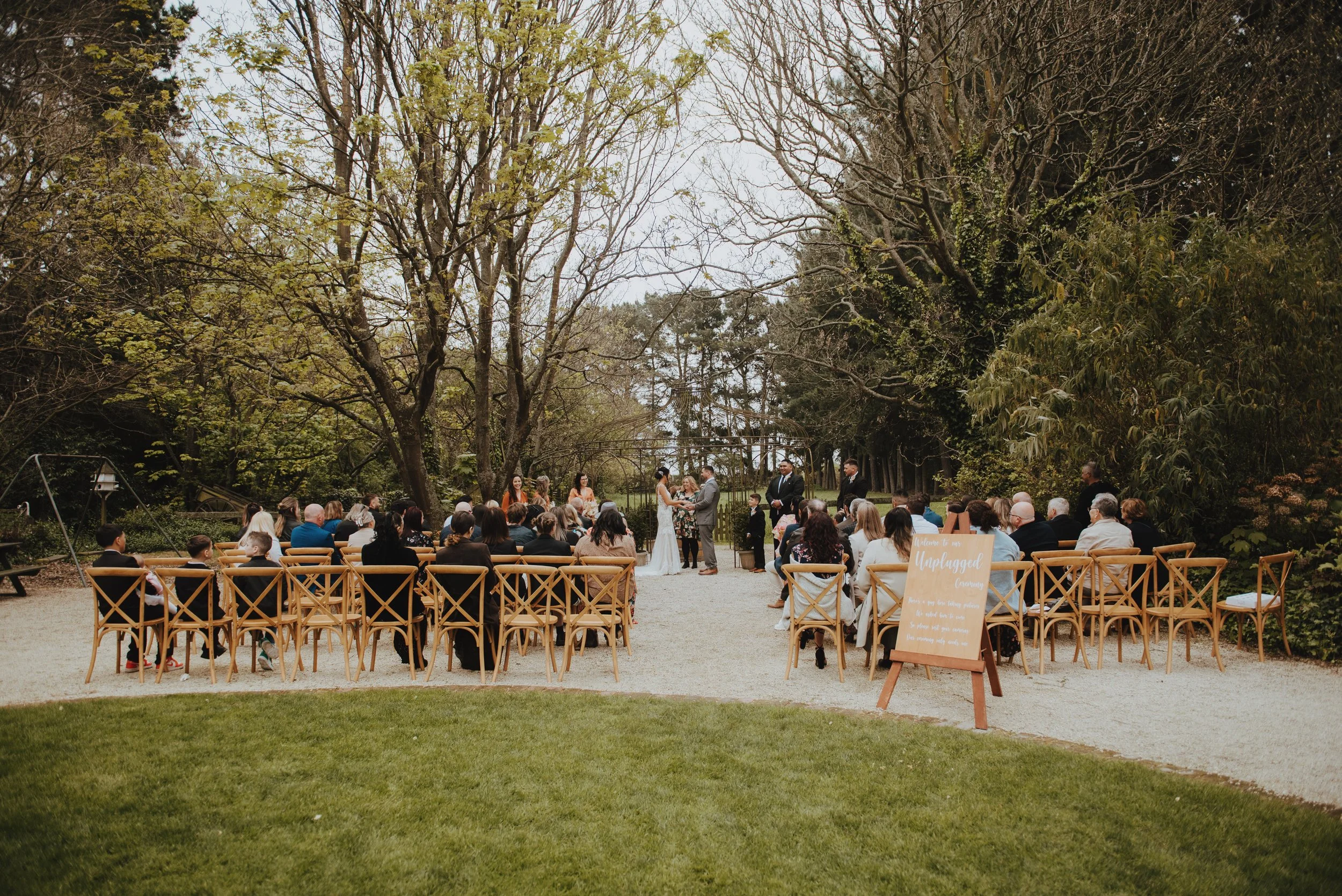
Ceremony at Trents Vineyard
2. Hair and Makeup
Hair and makeup are often underestimated in the timeline, but rushing through this part of the day can cause unnecessary stress. A good rule of thumb is to allow 1.5 hours per person. If you have a larger bridal party, consider hiring multiple stylists to work in tandem.
Here’s an example schedule for four people:
7:00 AM – 8:30 AM: Person 1
8:30 AM – 10:00 AM: Person 2
10:00 AM – 11:30 AM: Person 3
11:30 AM – 1:00 PM: Person 4 (the bride, ideally)
Starting early ensures there’s plenty of buffer time in case things run a bit behind. You also want to factor in a light breakfast, coffee, and any last-minute touch-ups or outfit issues.
3. First Look or No First Look?
Deciding whether to have a “first look” (a private moment where the couple sees each other before the ceremony) can impact your timeline significantly.
If you do a first look:
You can do couple and group photos before the ceremony.
This can free up time afterward for mingling or a cocktail hour.
It also gives you a calm, intimate moment together before the day kicks into high gear.
A great way to incorporate a first look is to schedule it 1.5 hours before your ceremony. This allows time not only for the emotional moment itself, but also for relaxed couple portraits and wedding party photos—without feeling rushed. For example, if your ceremony is at 3:00 PM, aim to have your first look around 1:30 PM, which means hair, makeup, and getting dressed should be completed by 1:00 PM.
If you don’t do a first look:
Photos with your partner will take place after the ceremony.
Build in extra time post-ceremony before your reception begins.
There’s no right or wrong answer here—just be sure to communicate your preferences with your photographer so they can plan accordingly.
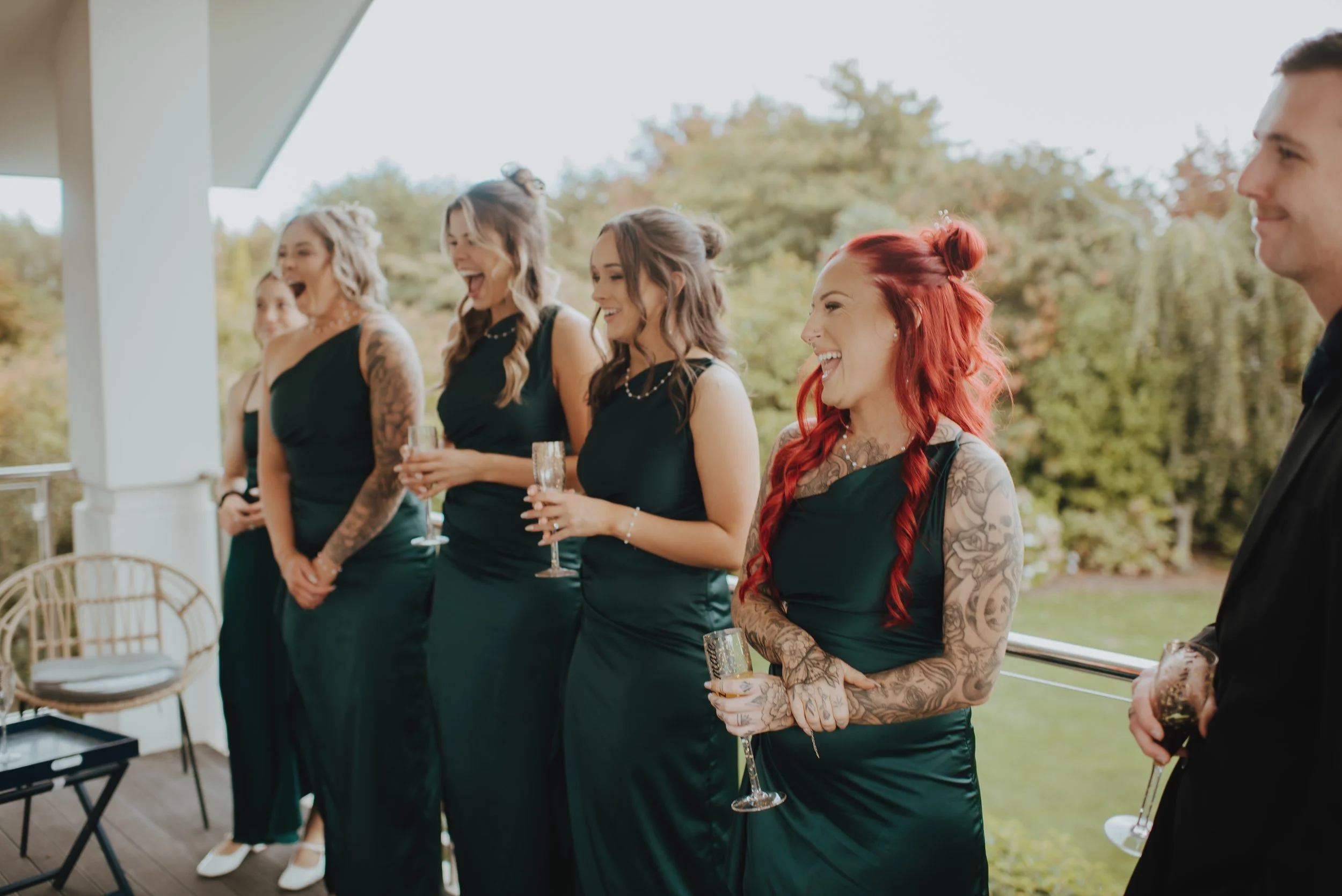
Bridal party first look with Bride
4. Group Photos: Set Aside Dedicated Time
It’s easy for group and family photos to stretch out longer than expected. People wander, go for bathroom breaks, or just forget when and where to be. That’s why the best time to do group photos is immediately after the ceremony and before people get their hands on food and drinks. Once guests start sipping champagne or finding snacks, it becomes much harder to wrangle everyone back together.
Set aside a dedicated window of 30–45 minutes for these photos to ensure everyone is included and nothing feels rushed.
Pro tip: Plan out a list of the group combinations you want ahead of time—this helps your photographer stay organized and efficient. As a guideline, estimate about 10 minutes per group photo (worst-case scenario), especially if you're dealing with large or complex family setups.
So, if you have, say, 4–5 groupings, budget at least 30–40 minutes. And as always, assign a trusted family member or friend (ideally someone who knows both sides) to help gather people—it makes a big difference.
Example slot:
3:45 PM – 4:30 PM: Family + Group Photos (immediately after a 3:00 PM ceremony)
5. Build in Downtime to Connect With Your Guests
One of the most overlooked (but deeply appreciated) parts of a wedding timeline is intentional downtime—a chance for you to breathe, soak in the day, and have real conversations with your guests.
Between all the hugging, dancing, and posing for photos, it’s easy to feel like you’re rushing from one moment to the next. Creating a pause where you can connect, laugh, and savor the atmosphere is essential.
Some options:
A private moment with your new spouse right after the ceremony
A 20-minute “welcome mingle” before the formal reception begins
A short break between photos and dinner where you can freshen up or sit down
Even just 15–30 minutes to catch your breath can make a world of difference.
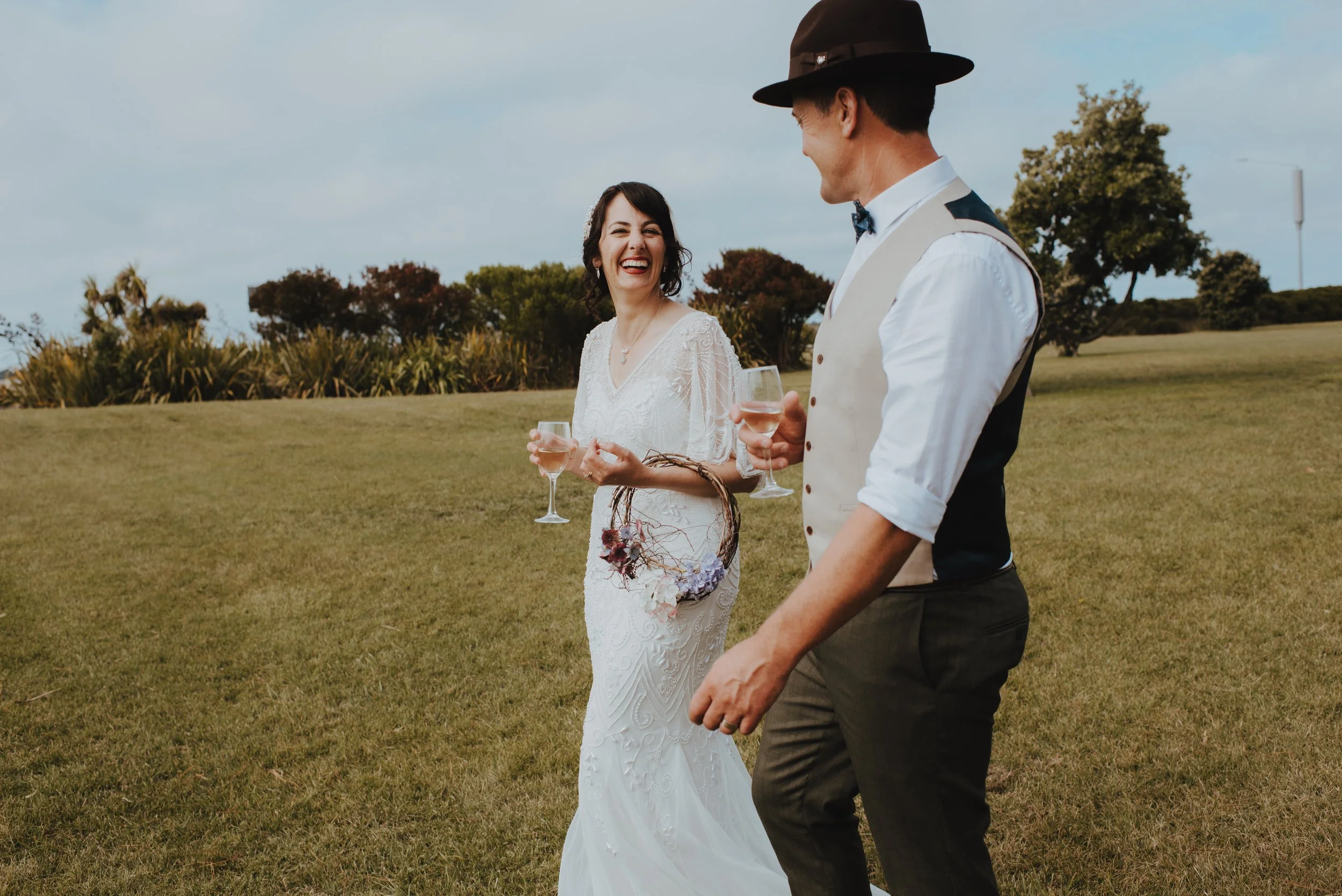
Newlyweds taking a moment to relax between group photos and reception
6. Reception Timeline Essentials
Once the formalities are complete, it’s time to celebrate! Your reception will have its own mini-timeline to guide the flow of the evening, and speeches are a big part of that.
Planning Speeches
Weddings can feature a lot of heartfelt (and sometimes hilarious) words, but a little planning goes a long way. Rather than leaving speeches to chance, talk with your key people in advance and decide who will speak, in what order, and for how long. This helps avoid last-minute stress and keeps the evening flowing.
The main characters who typically give speeches at weddings include:
The couple themselves (a thank-you speech or toast)
Parents (often one or both sets, sometimes just the father of the bride/groom)
The best man and maid of honor
Siblings or other close friends (optional)
If multiple people are speaking, consider giving each speaker a time limit of 3–5 minutes. This keeps the energy up and ensures there's time for everything else in the evening.
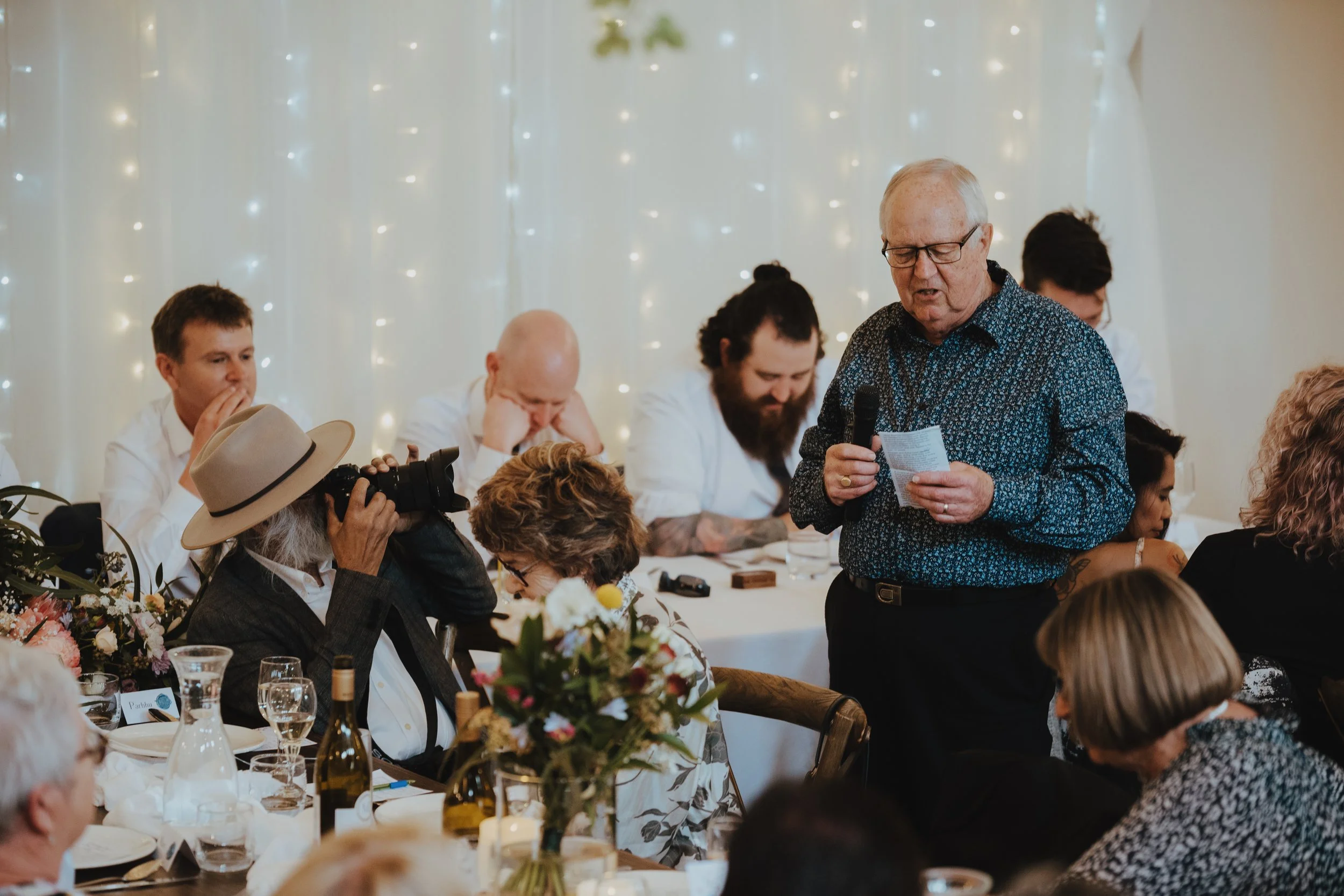
Tips for organizing speeches:
Create a speech order and share it with your MC and vendors (especially your photographer/videographer and DJ so they’re ready).
Ask each speaker to keep it personal, kind, and appropriate for all ages.
Try to keep speeches grouped together—either all before dinner or all just after. This avoids constant interruptions to the meal or dancing.
A classic reception timeline might look like:
5:30 PM: Guests arrive at reception venue / Cocktail hour
6:00 PM: Couple makes entrance
6:15 PM: Speeches begin (ideally 20–30 mins total)
6:45 PM: Dinner served
7:30 PM: Cake cutting
7:45 PM: First dance
8:00 PM: Open dance floor
9:30 PM: Late-night snack (optional)
10:30 PM – 11:00 PM: Grand exit or wind-down
Make it your own! Whether you're swapping speeches for a quiz game or skipping a cake cutting entirely, build a reception flow that reflects you.
7. Transportation and Travel Time
If your ceremony, photos, and reception are all in different locations, don’t forget to factor in travel time—and not just how long the drive is. You’ll want to include:
Time to gather belongings
Buffer time for parking or traffic
Time to herd your bridal party or guests onto shuttles
Even 5-10 minutes of cushion time between transitions helps you avoid feeling rushed.
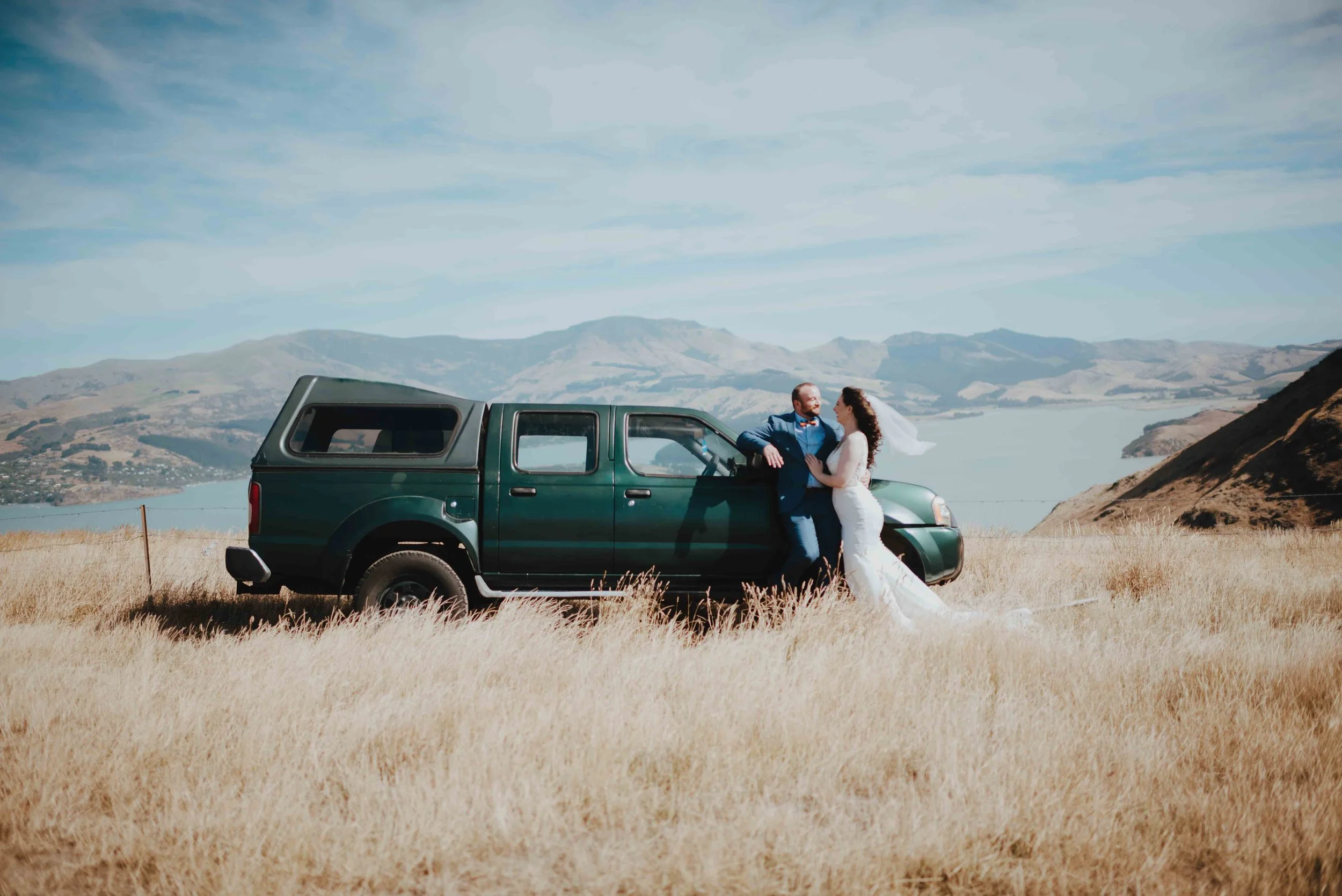
Newlyweds sneaked up to the Port Hills in the Groom’s favourite truck to share their vows in private.
8. Golden Hour Photos: Don’t Miss the Light!
If dreamy, romantic light is high on your photography wishlist, speak to your photographer about the timing of golden hour. This usually happens in the hour before sunset and can make for stunning portraits.
You can sneak away from your reception for 15–20 minutes to grab a few quick shots. Bonus: this break also gives you a few peaceful moments together as a newly married couple.
9. Always Add Buffer Time
Here’s a wedding planning truth: everything takes longer than you think it will.
Someone loses their tie. A button pops. The ring bearer needs a nap. Things happen.
Build in 15–30 minute buffers throughout your timeline so delays don’t throw off the entire schedule. These buffers are your best friend and give you freedom to enjoy the day without watching the clock.

Custom wine glasses for bridal party
Final Thoughts
A good wedding timeline isn’t about rigid schedules—it’s about creating room to enjoy the magic. Give yourself time to be present, to laugh with friends, to hug your parents tight, and to dance like nobody’s watching. With a thoughtful structure and a few smart buffers, your wedding day can feel both beautifully orchestrated and wonderfully relaxed.
So breathe deep, grab a pen (or your planner), and start shaping a timeline that lets you celebrate love without the stress.